Our approach
Eight principles, several of them inconvenient
These govern every project we fund. They make our work slower, harder to photograph and more difficult to fundraise for — and they are the reason it lasts.
Working principles
How we decide what to fund
We listen before we plan
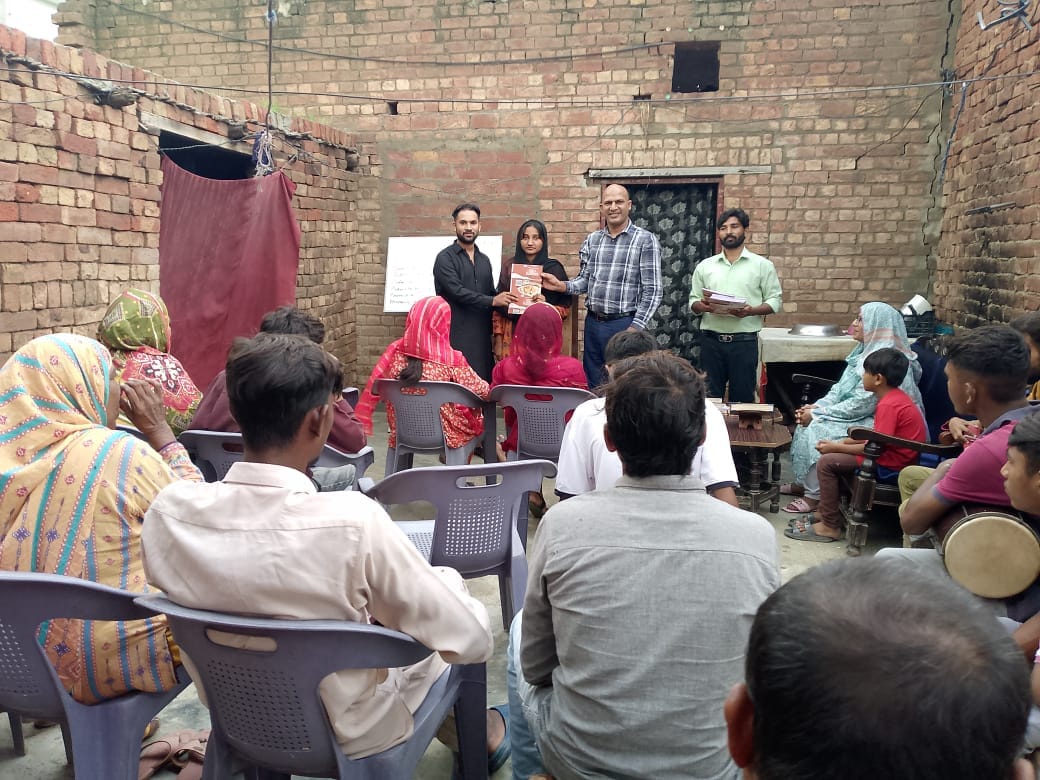
Months of conversation precede any project — with women, young people, the poorest households and people with disabilities, separately where they would not speak freely together. Communities map their own assets before discussing needs.
We work through the local church
In most places we work, a congregation is already present, already trusted, and not going anywhere. We resource and equip it to serve its own neighbours rather than running programmes past it.
The community contributes first
No project proceeds without a meaningful local contribution of labour, land, materials or funds. Ownership cannot be transferred at the end; it has to exist from the beginning.
We repair before we build
A broken water point, an under-equipped clinic, an existing school — strengthening what is already there is cheaper, faster and avoids adding assets a community has not yet been helped to maintain.
We plan the handover at the start
Every project has an agreed exit point written into it before it begins, and the community confirms readiness before we step back.
We hold relief and development together
Relief alone becomes dependency; development alone ignores the family with nothing to eat this week. Every relief response is connected to the slower work that follows it.
We separate faith from leverage
The invitation to faith is offered openly and freely. Nothing anyone receives from us depends on their answer, and it must be genuinely possible to say no.
We measure what lasts
Outputs are easy to count and easy to inflate. We look at what is still functioning years after handover — committees still meeting, groups still lending, teachers still in post.
The hard part
Why listening takes months, not meetings
The single most common question we get from supporters is why it takes half a year of conversation before anything gets built. The honest answer is that the conversation is the intervention, not a formality before it.
Communities have usually been consulted before, often by organisations who had already decided. So the first several meetings produce what people think we want to hear — which is not dishonesty, but the entirely rational product of experience.
Reaching the point where a community will tell us they disagree with each other, or that our idea is wrong, takes time. It is also the point at which the work becomes worth doing.
What we have learned the expensive way
Each of the eight principles above exists because we broke it at some point and paid for it. A few examples, so they are not abstract.
The grain store that flooded
We built a grain store on a site our team preferred, in a community that had mentioned — quietly, and more than once — that the ground took water in a heavy season. It flooded. Nobody had bad intentions; we simply had not created a setting in which disagreeing with us felt possible.
The training nobody could attend
A women’s livelihoods course scheduled at exactly the hour that women in that community drew water. Attendance was poor and we initially read it as a lack of interest. It was a timetable problem we had created.
The second borehole we nearly drilled
In a divided village, drilling a second water point would have been faster and easier to fund than eleven months of mediation. It would also have written the division permanently into the infrastructure and left two assets to maintain instead of one. Reconciliation was the cheaper option, and it took a year.
What this means for our funders
We are straightforward with supporters about the consequences of working this way, because they are real.
- Our projects start slowly, and the first phase produces meetings rather than outputs.
- We often fund less visible things — a repair, a committee, a mediator’s training — than a new building.
- We sometimes spend months in a community and conclude we are not the right partner.
- We will tell you what did not work, which makes our reporting less triumphant than some.
What we offer in return is work that is still functioning after we have gone, and reporting you can actually rely on.
Handover is the goal, not the end
Every project we fund has an agreed exit point written into it before it begins, and the community confirms readiness before we step back. We then return, years later, to see what is still running.
That last part is unusual and it is the most useful thing we do for our own learning. Committees still meeting, savings groups still lending, teachers still in post — those are the numbers that tell us whether any of this worked.
“Let us not love with words or speech but with actions and in truth.”
See these principles at work
Ten ministry areas, all delivered through partner churches and community leaders.