Our story
It started with a question nobody wanted to ask out loud
Not how do we give more — but why does so much giving leave so little behind?
The question
Ministry of Reconciliation began with a small group of Christians who had spent serious time in communities receiving aid — and who kept noticing the same uncomfortable pattern.
Help arrived. It was well-intentioned, often generously funded, and frequently competent. And three years later, in a great many cases, very little had changed. The water point had broken again. The training programme had ended with the grant. The building was standing but unused.
What struck them most was not the failure itself but a pattern within it. The projects that had lasted were almost always the ones a community had decided on itself. The ones that had collapsed were almost always the ones somebody had brought in already designed.
Two convictions
Out of that observation came two convictions that still govern the organisation.
The first: work through what is already there. In nearly every community there was a church — often meeting under a tree, with no budget at all — that had permanence, trust and specific local knowledge no outside organisation could acquire. Building around it rather than through it was wasting the most valuable asset in the room.
The second, and slower to arrive: a lot of what keeps communities poor is relational rather than material. Once you start looking, it is everywhere. Disputes that stop land being farmed. Divisions that make a shared market impossible. Households where conflict makes any planning pointless.
That second conviction eventually gave the organisation its name.
How it developed
The shape of the journey so far
- The beginning
A conversation, not a strategy
Ministry of Reconciliation began with a small group of Christians who had spent time in communities where relief arrived regularly and changed very little. The founding question was not how to give more, but why so much giving left so little behind.
- Early years
First partnerships with local churches
Rather than opening field offices, the early work was built around long-term relationships with congregations already serving their own neighbours. That decision has shaped every year since.
- Growth
Adding renewal to relief
As partnerships matured it became obvious that relief alone was insufficient. Education, savings groups and community development were added — deliberately slower work, funded on longer horizons.
- Learning
Naming the reconciliation work
Again and again partners reported that the deepest obstacle in a community was a broken relationship rather than a missing resource. Reconciliation moved from something we noticed to something we resourced and trained for.
- Maturing
Accountability and safeguarding strengthened
Safeguarding policies, complaints routes independent of programme staff, and honest public reporting of failures were formalised — in several cases because something had gone wrong and we had learned from it.
- Today
Handing more over, sooner
Our current direction is to place funding and decision-making with partner organisations directly, and to measure ourselves by how much we are no longer needed. [Add current strategic priorities here.]
What we have changed our minds about
An honest account of an organisation’s history should include the things it got wrong. Here are three we would name.
We used to run short-term overseas trips
They were popular with supporters and, we eventually accepted, frequently cost partner communities more in hosting, translation and supervision than they contributed in work. We stopped, and we now facilitate only longer placements where a partner has identified a skills gap they cannot fill locally.
We used to photograph people receiving things
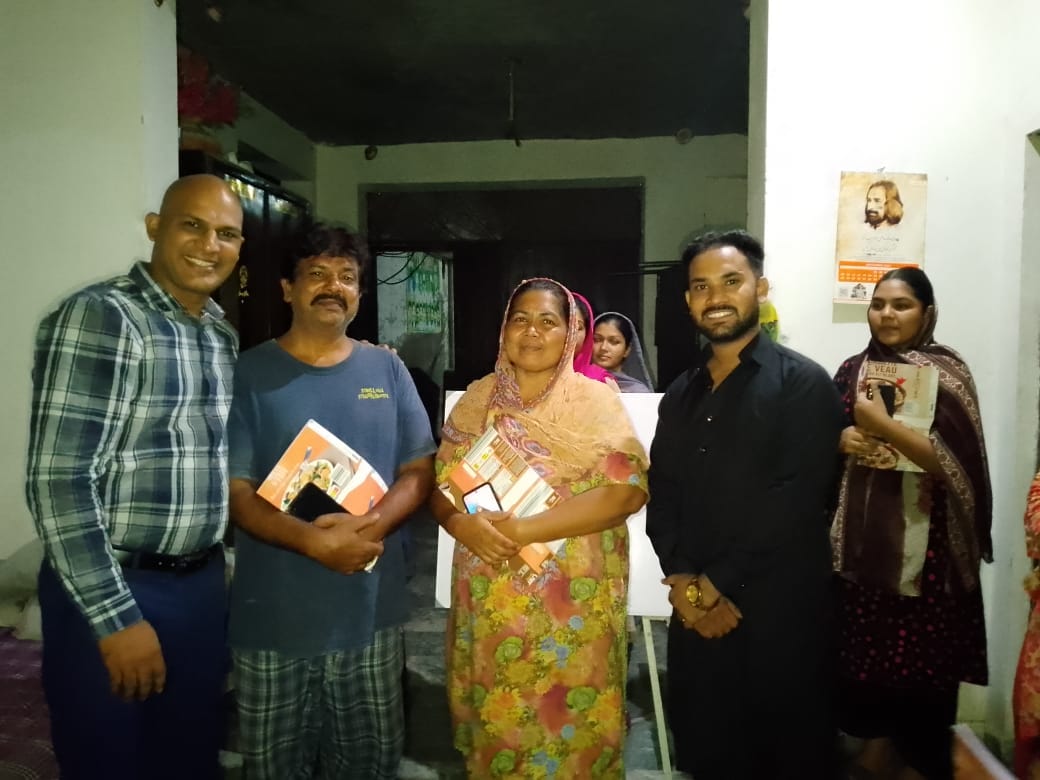
A photograph of a transfer of goods puts one party permanently above the other, and our older materials show it. We changed our policy, and we now photograph people at eye level, with explained consent that can be withdrawn.
We used to treat reconciliation as pastoral work
For years it sat to the side of the programme — valuable, but not resourced or trained for. Partners kept telling us it was the binding constraint. It is now a ministry area in its own right, with trained local mediators and a proper budget.
Where we are heading
The direction now is to hand over more, sooner: placing funding and decision-making with partner organisations directly, strengthening their governance and financial systems so they can hold grants in their own name, and measuring ourselves by how much we are no longer required.
That is an uncomfortable metric for an organisation to adopt. We think it is the right one.
“Unless the Lord builds the house, the builders labour in vain.”
The next part of the story is being written by communities
Our current direction is to place funding and decision-making with partner organisations directly.