Today
Relief
Immediate, practical help for people in crisis — food, safe water, health care, shelter and family support.
Explore relief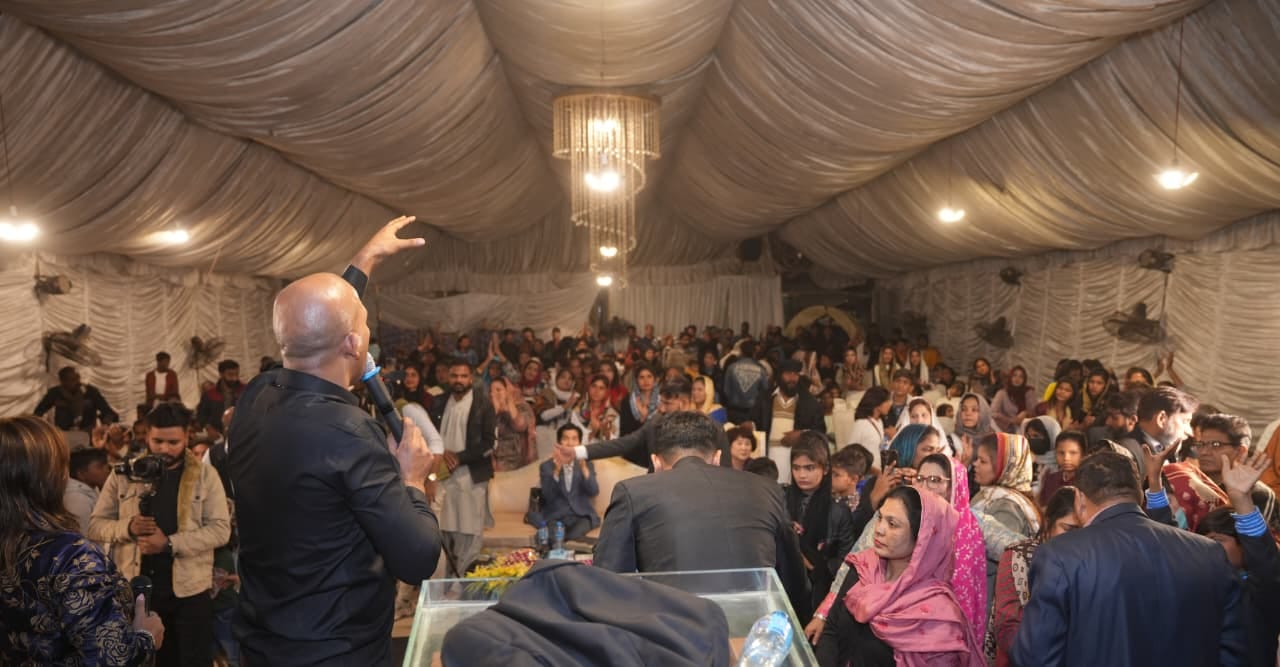
About us
We serve vulnerable communities alongside the churches and leaders who already live there — and we measure ourselves by what is still standing after we step back.
Who we are
Ministry of Reconciliation exists because a group of Christians kept noticing the same thing: relief arrived in communities regularly, and very little changed. The founding question was not how to give more, but why so much giving left so little behind.
The answer we arrived at shapes everything. Poverty is rarely only a shortage of resources. It is also a shortage of margin, of decision-making power, and — very often — of working relationships. A well drilled into a divided community solves one problem and leaves the harder one untouched.
So we work through local churches and community leaders rather than around them. We resource, train and account for funds. Communities set priorities, contribute first, and own what gets built. And we take reconciliation seriously as development practice, not as pastoral decoration.
We are open about being a Christian organisation and equally clear that no help we give is ever conditional on belief. Nobody who comes to us is asked what they believe, and nothing they receive depends on their answer.
Our mission
To serve vulnerable communities alongside local churches and leaders — meeting urgent needs, building lasting change, and pursuing the reconciliation of people to God and to one another.
Our vision
Communities where no one is left destitute, where relationships broken by poverty, conflict and injustice are being repaired, and where local churches are a visible source of hope to their own neighbours.
Our three commitments
Today
Immediate, practical help for people in crisis — food, safe water, health care, shelter and family support.
Explore reliefTomorrow
Education, livelihoods, savings groups and community development that build capacity a community owns.
Explore renewalAlways
Prayer, discipleship, church partnership and reconciliation — repairing relationships with God and one another.
Explore restorationWhat we value
Every person we work with bears the image of God. That has operational consequences — in how we photograph people, how we organise a distribution, and whose judgement we treat as authoritative about their own life.
Communities set their own priorities and own the results. We resource, train and account for funds. We do not decide what a community needs on its behalf.
No material help we give is ever conditional on belief, church attendance or participation. Aid used as leverage over people who cannot refuse is not generosity.
We report what did not work alongside what did. An organisation that only publishes success is not giving you information you can rely on.
Every project has an agreed handover point written in from the start. We measure success by what continues after we step back, not by what we delivered.
We pray before we plan, and we ask our supporters to pray as seriously as they give. This work is not finally accomplished by our competence.
Non-negotiable
“All this is from God, who reconciled us to himself through Christ and gave us the ministry of reconciliation.”
This is where our name comes from — and it is a description of a job, not a slogan.
In their words
“Other organisations came, built something, and left. This partnership asked us first what we had decided to do — and then helped us do it. The committee still meets every month.”

[Name] (placeholder, awaiting content)
Community committee chair · [Community, Region] (placeholder, awaiting content)
“We were already serving our neighbours with almost nothing. What changed was the training, and being trusted to make the decisions ourselves.”

[Name] (placeholder, awaiting content)
Partner church pastor · [Community, Region] (placeholder, awaiting content)
“I have forty-eight children in one room. The training did not remove that, but it taught me how to teach reading inside it.”

[Name] (placeholder, awaiting content)
Teacher, partner school · [Community, Region] (placeholder, awaiting content)
Names and locations are placeholders. We publish stories only with informed consent.
We work alongside
Partner names and logos to be confirmed by the organisation.
Our approach page sets out the eight principles that govern every project we fund — including the inconvenient ones.